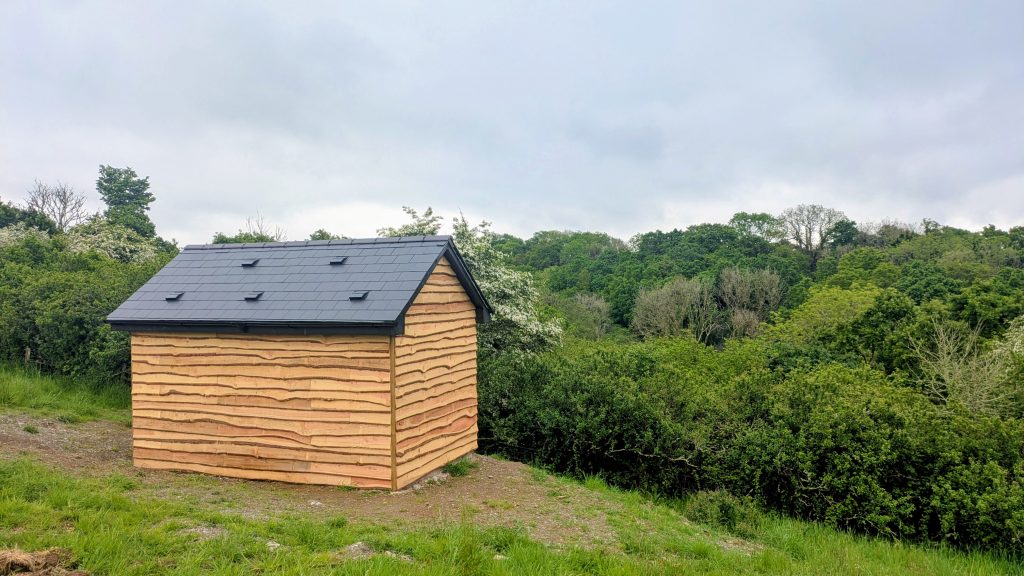
NEW SHERFORD RESIDENTS IN 2026: A BESPOKE BAT HOUSE TO WELCOME WILDLIFE
Sherford is set to welcome some special new residents this year, as a unique new home designed for bats is unveiled. The new year marks the completion of a designated bat house in the heart of Sherford’s Country Park, reinforcing the town’s long-standing commitment to creating homes for both people and wildlife. The purpose-built structure represents the latest milestone in Sherford’s multi-million-pound environmental investment.
Designed by ecological experts, the 3-metre by 5-metre barn-style building features timber-clad walls and a specially engineered tiled roof with strategic gaps to allow access for a range of bat species. Catering for the different needs of bats throughout the year – from summer roosting through to winter hibernation – it provides a safe, climate-resilient haven where these remarkable mammals can thrive in all seasons.
The single-storey bat ‘bungalow’ is the newest addition to the town’s extensive natural infrastructure, with over £8 million invested so far in ecological initiatives and green enhancements by the Sherford Consortium – a partnership between award-winning national housebuilders Taylor Wimpey and Vistry, which includes Linden Homes, Bovis Homes and Countryside Partnerships.*
A place to hang out
Nestled in a quiet corner of Sherford’s Country Park, the new structure is carefully oriented to face sheltered boundaries, rather than the open fields where new foot and cycle paths will be located, helping minimise disturbance to the bat population. More than just a shelter, the building forms a vital link within the surrounding ecosystem, supporting wildlife movement across the site.
Sherford already boasts an impressive diversity of bat species, from common and soprano pipistrelles to the rarer greater and lesser horseshoe bats – both recorded as residents of the area. The new bat house strengthens ecological connectivity, offering prime access to nearby woodland, grassland and water habitats.
Peter Sadler, Managing Director of Vistry Southwest, part of the Sherford Consortium, said: “The new year is off to a positive start at Sherford, and the new bat house has been designed with the same care and attention we give to every home. Purpose-built to support local wildlife, it is one of many eco initiatives that reflect our long-term commitment to enhancing the environment and boosting biodiversity. Sherford continues to demonstrate that thoughtful development can enrich the natural world while providing high-quality homes for growing communities.”
David Scholefield, Director of EAD Ecology, said: “The bat house has been designed to keep bats safe and maximise the chances of them finding and using it. While it may take time for them to adopt their new accommodation, it offers an important long-term resource for protected species and can provide a real boost to local populations. We encourage visitors to enjoy the structure from a distance so the bats feel at home. Look out for them after sunset, flying along streams and woodland edges, and catching their supper over the ponds and fields across the Country Park.”
Commitment to nature
The bat house joins Sherford’s distinctive wooden bat bridge crossing Hercules Road as part of a multi-million-pound programme dedicated to preserving and enriching the natural landscape. Since its inception, Sherford’s masterplan has placed the environment at its core, proving that new communities can enhance biodiversity rather than diminish it.
As the Country Park – currently 92 acres – continues its journey towards an impressive 500-acre landscape, residents can expect further wildlife-friendly features such as bird and bat boxes, badger tunnels and habitat piles. These additions form part of Sherford’s wider strategy to create not only a thriving place to live, but one where nature thrives too.
Sherford’s environmental credentials include:
• More than 50% of the town dedicated to green space
• Over 264,500 trees planted to date
• An award-winning 380m living wall welcoming visitors to the town
• The creation of 170 acres of woodland and new wildlife habitats
• Miles of wildlife corridors connecting natural areas
• Over £8 million invested in green infrastructure and ecological initiatives so far – including over £1 million spent before the first brick was laid.