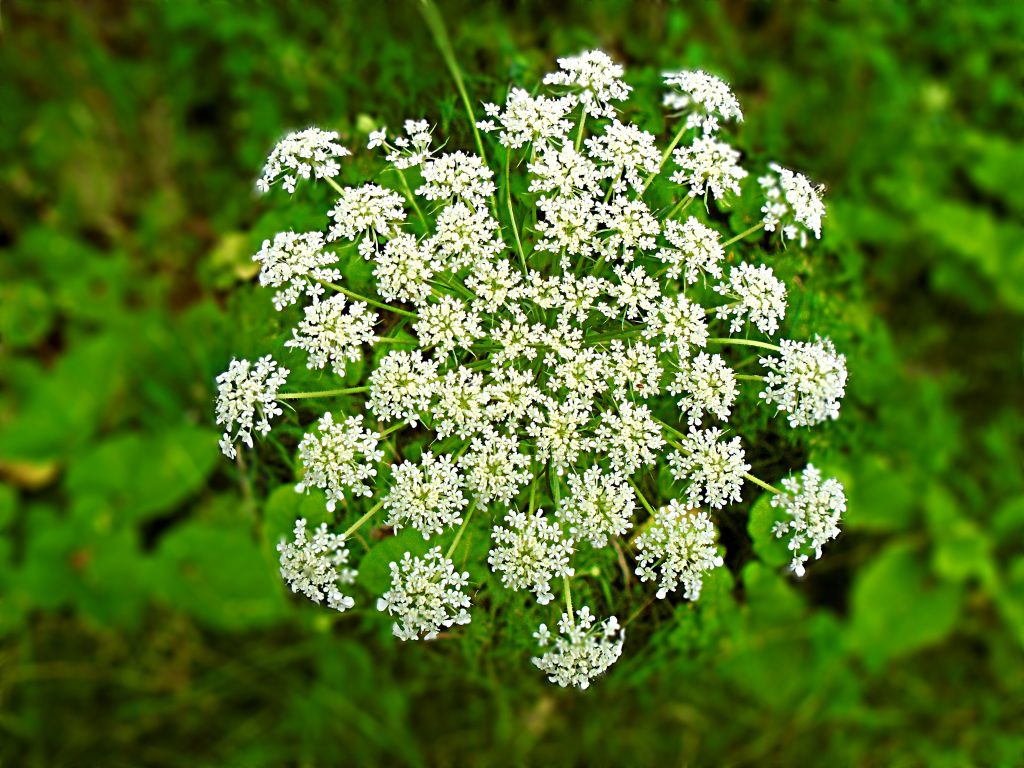
HEMLOCK IN SHERFORD COUNTRY PARK
Hemlock has recently been identified growing in parts of the Country Park, particularly in the area around Skylark Field.
Hemlock is a native plant commonly found across the UK at this time of year, and its presence in the Country Park is not unusual. However, as it is toxic if ingested, we are asking everyone visiting the park to be mindful of it, particularly where children and dogs are present.
Action is being taken by YGS Landscapes. They manage Sherford's green spaces and have a Hemlock Management Plan in place. This includes work to control the spread of the plant and keep it away from public paths wherever possible.
About hemlock
Hemlock (Conium maculatum) is a tall, upright plant that can grow well over a metre and a half in height, sometimes taller. It has hollow, hairless stems marked with purple or reddish blotches, and finely divided, feathery leaves. Between June and July, it produces clusters of umbrella-like white flowers.
The plant has a distinctive, unpleasant smell, and this odour helps deter animals and people from touching or eating it, which is one reason serious poisonings are rare. The smell isn't always present at every stage of the plant's growth, so it shouldn't be relied on as the only means of identifying it.
Every part of the plant is poisonous, and even a small amount can be dangerous if ingested. Hemlock is well known historically as a form of poison, so it has a long-held reputation for being a plant to avoid.
Did you know?
- Pollinators love it! Hemlock is a larval food-plant for several moth species, and a host to a hidden world of specific fungi species. These have all evolved alongside it to be able to tolerate the toxins.
- Common names include "Mother dies", "Kexies" and "Woomlicks".
Our advice
- Take care when walking in the Country Park, especially around Skylark Field
- Keep a close eye on children and dogs, and move them away from touching or picking any plants you don't recognise
- Do not attempt to touch, pick, or remove hemlock yourself – it should only be handled by trained professionals with the right protective equipment
- If you wish to raise any concerns, please contact info@sherford.uk