NATURE AT SHERFORD

A home for wildlife

Sherford was always meant to be more than a place to live. From the very beginning, nature was part of the plan.

Before the first brick was laid, more than £1 million had already been invested in ecology, planting and habitat creation. Today, that commitment has grown to over £8 million — and it shows. More than half of Sherford is dedicated to green space. Over 264,500 trees have been planted. One hundred and seventy acres of woodland and new wildlife habitats have been created, connected by miles of wildlife corridors that thread through and around the town.

Welcoming visitors to Sherford is a 380m living wall — award-winning, and planted with over 30,000 plants — alongside a striking wooden bat bridge, designed to protect the local bat population that shares this landscape with us.

The Country Park, currently 92 acres, is on a journey towards an impressive 500-acre landscape. As it grows, so will the wildlife-friendly features within it: bird and bat boxes, badger tunnels, habitat piles, and more — each one a small but considered part of a much bigger picture.

Throughout Sherford, green spaces take many forms: parkland, meadows, wetlands, stream corridors, woodland, hedgerows and recreation space for play, sport and quiet reflection. The aim is simple — to create a place where people and nature thrive alongside each other.

This page is where you can explore the wildlife that calls Sherford home.
Image

Skylarks at Sherford

Listen up – there’s something special singing in Sherford’s skies

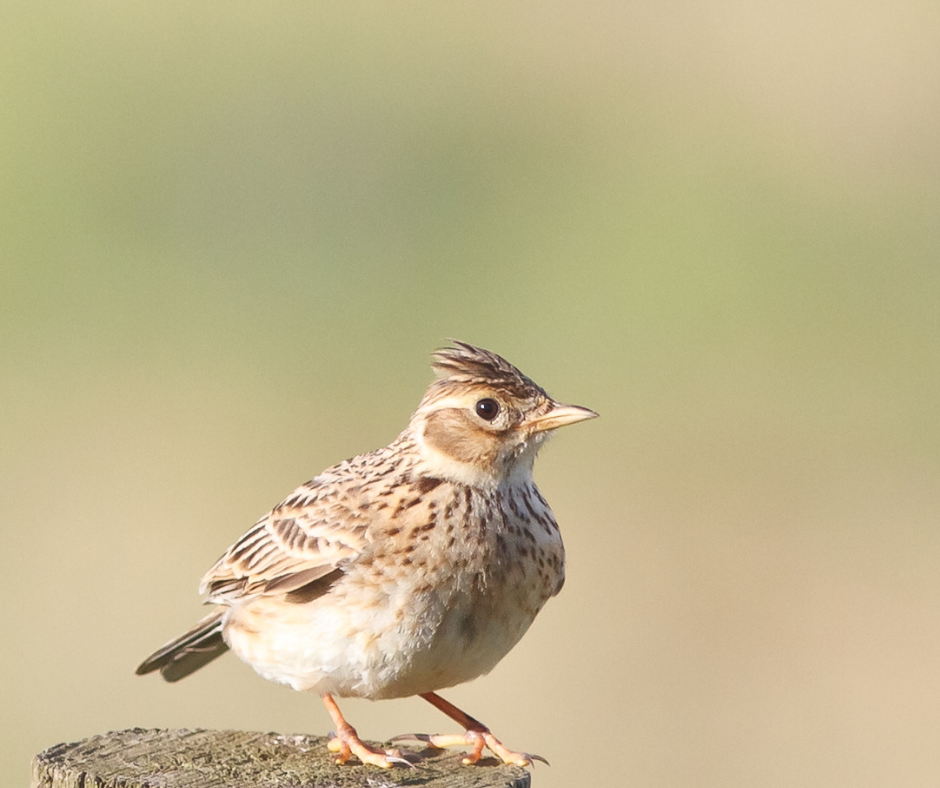
If you’ve ever walked through the Country Park on a bright spring morning and heard a long warble of birdsong song from somewhere high above you, you’ve already met one of Sherford’s most remarkable residents. The skylark is one of Britain’s most iconic birds – and Sherford is one of the places it still calls home.

What is a skylark?

The skylark (Alauda arvensis) is a streaky brown bird, roughly the size of a sparrow but stockier, with a small crest on its head. It lives in open grassland, farmland and moorland – and it is famous for one of the most extraordinary displays in the natural world.

A male skylark will rise almost vertically from the ground, climbing hundreds of metres into the sky, and then hover there for up to an hour, pouring out a continuous, complex song. This isn’t just beautiful to listen to, it’s the skylark telling the world he’s here, his territory is his, and the breeding season is under way. When he’s done, he folds his wings and parachutes back to earth in near silence.

For centuries, that song has been one of the defining sounds of the British countryside. It inspired Vaughan Williams’ The Lark Ascending, moved Shelley to write his famous ode, and featured in the poetry of Chaucer. Today, hearing a skylark in full flight is rarer than it used to be, which makes Sherford’s population all the more precious.

Skylarks at Sherford

The Country Park at Sherford was designed from the outset to support bird species, and skylarks are among those it was created to protect. The open grassland habitats within the park provide exactly the kind of ground-level environment skylarks need: space, low disturbance, and room to nest.

Skylarks nest directly on the ground – no tree, no hedge, no elevated perch. The female lays three to four eggs in a shallow cup of grass, hidden among longer vegetation. The eggs and chicks are extraordinarily well camouflaged, making them almost invisible to the naked eye. That’s both their strength and their vulnerability: you could walk within a metre of a nest without ever knowing it was there.

Once disturbed – by a dog, a football, a pair of feet – a nest can be abandoned. Chicks that are left alone even briefly in cool weather can perish quickly. Because skylarks can raise multiple broods between March and August, a single season with high disturbance can have a significant effect on the local population.

Image

Bats at Sherford

As dusk falls over Sherford’s Country Park, something remarkable happens. If you stand quietly near the ponds or along the woodland edges and watch the fading light, you’ll start to see them — darting, flickering, impossibly fast. Sherford is home to an impressive diversity of bat species, from the common and soprano pipistrelle to the rarer greater and lesser horseshoe bat, both recorded as residents of the area.

Bats were part of Sherford’s story before the town even began. One of the first structures built here wasn’t a house — it was a bat bridge. The distinctive wooden crossing over Hercules Road was designed to help local bat populations navigate safely across the site, screening out road light and mimicking the wildlife corridors that run through and around the town. It remains one of Sherford’s most recognisable landmarks.

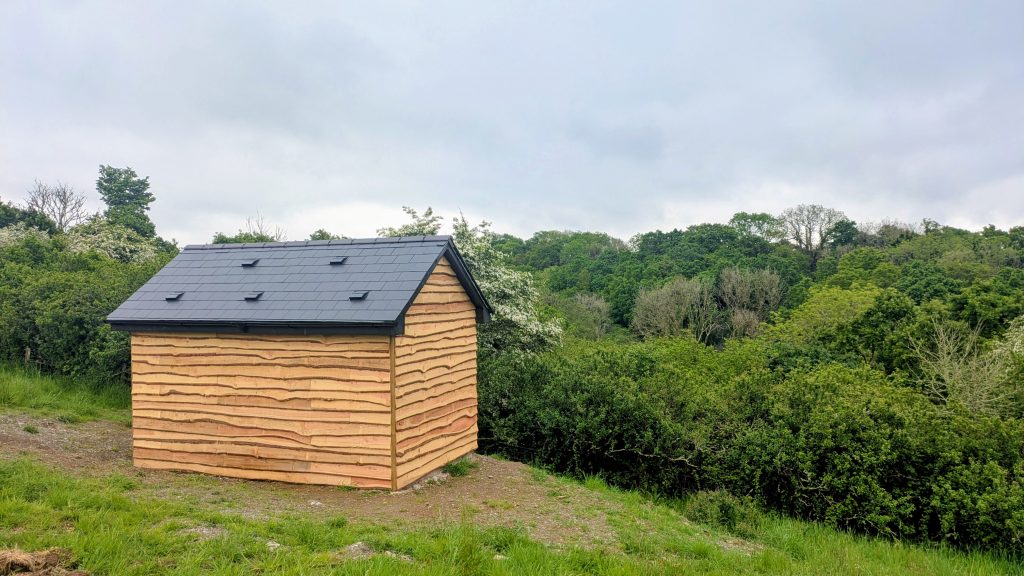
In early 2026, Sherford welcomed its newest wildlife residents into a purpose-built bat house in the heart of the Country Park. Designed by ecological experts, the timber-clad, barn-style building — three metres by five — features a specially engineered roof with strategic gaps to allow access for a range of species. It caters for bats throughout the year, from summer roosting to winter hibernation, offering a safe, climate-resilient home in all seasons. Carefully positioned to face sheltered boundaries away from paths and open fields, it’s designed to give bats the peace and quiet they need to settle in.

The bat house connects to the wider habitat network around it — woodland, grassland and water — supporting the movement of wildlife across the site as the Country Park continues to grow towards its eventual 500-acre landscape.

How to spot bats at Sherford

The best time to see bats is just after sunset, when they emerge to feed. Head to the ponds, streams or woodland edges in the Country Park and look for fast, erratic movement low over the water or between the trees. Pipistrelles — the UK’s most common bat — are often the first to appear and are usually visible to the naked eye. If you have a bat detector, even better: each species produces its own distinctive echolocation call.

Please enjoy the bat house from a distance. The more undisturbed it remains, the better the chance that bats will make it their home.

Image

Where wildlife thrives

Sherford is home to a remarkable range of creatures. Badgers, otters, owls, reptiles and a rich variety of insects all share this landscape — alongside the skylarks and bats you can read about elsewhere on this page. Ecology and biodiversity have been central to the design of Sherford’s green spaces from the start, with new habitats created specifically to give local wildlife room to flourish.

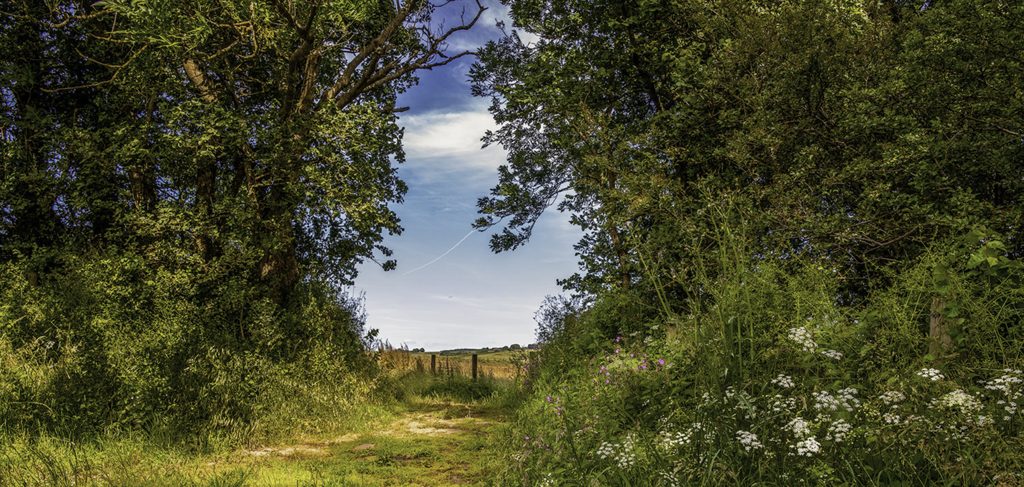
Those habitats are as varied as the species they support. Native woodland and young orchards sit alongside wildflower meadows and bluebell fields. Species-rich hedge banks border wetlands and open grassland. Raised bee banks attract pollinators. Stream corridors and pastures connect it all, creating a genuinely biodiverse environment that rewards exploration on foot at any time of year.

These spaces aren’t only good for wildlife. Woodland, meadow and wetland habitats all play a role in capturing carbon — meaning that every tree planted and every hedgerow established at Sherford is doing quiet but important work for the planet too.

As the Country Park grows towards its eventual 500-acre landscape, more habitats will follow: bird and bat boxes, badger tunnels, habitat piles and further planting that builds on what’s already here. The aim has always been a place where nature doesn’t just survive alongside a new community — it thrives because of it.

Image